How to Prove Your Value as an Executive Assistant:
The ROI Framework
A practical, step-by-step framework for Executive Assistants to quantify their impact, communicate ROI to leaders, and secure strategic responsibility. Download the definitive guide to proving your value and accelerating your career.
Join 1,000+ Executive Assistants demonstrating measurable impact across their organizations.
THE INVISIBLE IMPACT PROBLEM
Every Senior EA has had this moment: you know you're carrying more than your role description says. You know your executive's week would collapse without you. You know the decisions you make, the crises you prevent, and the time you recover. But when it comes time to articulate that value — in a raise conversation, a performance review, or a conversation about your career trajectory — you struggle to translate what you do into language leadership will act on. The problem isn't that your value doesn't exist. The problem is that no one taught you how to measure it.
This is the ROI framework that changes that. Built on organizational psychology principles, it gives Senior EAs a systematic approach to quantifying their strategic contributions, presenting their impact in terms executives understand, and using that data to drive compensation, title, and career conversations that produce results.
Page Guide: What You'll Learn
- Step-by-step methods to calculate time, financial, and risk ROI
- Ready-to-use frameworks for structuring executive presentations
- Common pitfalls to avoid when defending your architecture practice
- Actionable next steps to secure your mandate and expand your influence
The Psychology of Architecture
Why EA Value Is Invisible by Default
Executive assistants operate in what organizational psychologists call a "negative-space role" — your value is most apparent when you're absent, not when you're present. When you're doing your job well, things run smoothly. Meetings happen on time. Briefings are ready. Conflicts don't reach the executive's desk. Decisions get made with the right information. Nobody notices because nothing went wrong.
This creates a structural invisibility problem. In most organizations, value is measured by what you produce — sales closed, code shipped, campaigns launched. EAs produce outcomes that are equally valuable but fundamentally different: time recovered, crises prevented, information filtered, decisions improved. These contributions are real, but they're not tracked by any standard organizational metric. They live in the gap between what would have happened without you and what actually happened because of you.
The consequence is predictable. When budget conversations happen, when leadership discusses headcount, when compensation decisions are made — EA contributions aren't in the data. Not because they don't matter, but because no one measured them. The workload is invisible. The impact is invisible. And invisible work gets compensated invisibly — which is to say, inadequately.
“Value is measured by visible output; protection and prevention rarely appear on balance sheets.”
EXECUTIVE ALIGNMENT
The 4-Part EA ROI Framework
Proving your value requires translating what you do into the four categories of impact that executives already care about: time, money, risk, and capacity. Every strategic EA contribution maps to one or more of these categories.
Cost Optimization
Reducing redundant technology and optimizing vendor spend across the portfolio.
MEASURED VIA:
TCO reduction & license consolidation.
Risk Mitigation
Preventing system outages, security breaches, and costly compliance violations.
MEASURED VIA:
Incidents avoided & tech debt ratio.
Revenue Growth
Enabling new digital capabilities, scalability, and faster market entry.
MEASURED VIA:
New revenue & integration speed.
Delivery Speed
Streamlining developer workflows and reducing project friction.
MEASURED VIA:
Time-to-market & engineering capacity.
Time ROI — Hours Recovered for Your Executive
Time ROI: Quantify Executive Hours Saved
This is the most immediately measurable and most persuasive category. Your executive's time is the most expensive resource in the building. Every hour you recover for them — by declining unnecessary meetings, resolving issues before they escalate, preparing briefings that eliminate prep time, or restructuring their calendar — has a calculable dollar value.
How to measure it: Track the meetings you decline or shorten on your executive's behalf. Document the calendar restructuring you've done and the hours reclaimed. Estimate the executive's hourly rate (total compensation ÷ 2,080 working hours) and multiply by hours recovered per month.
Example: If your executive earns $400,000 and you recover 8 hours per week through calendar optimization and meeting triage, that's approximately $1,538 per week — or roughly $80,000 per year — in recovered executive time. That number makes a raise conversation very straightforward.
The Executive Time Optimizer is built to help you conduct this time audit systematically. The Strategic Meeting Prep Auditor identifies where meeting preparation efficiency translates to recovered executive hours.
- Track meetings you decline or shorten on the executive's behalf and log time saved.
- Document calendar restructuring actions and estimate hours reclaimed per week.
- Calculate the executive's hourly rate (Total Compensation ÷ 2,080).
- Multiply reclaimed hours by the hourly rate to compute recovered-dollar value per month and year.
ROI Calculation Example
| Exec Comp + Benefits | $400,000 / yr |
|---|---|
| True Hourly Rate | $192 / hr |
| Hours Reclaimed by EA | 8 hrs / wk |
| Weekly Value Created | $1,538 / wk |
| Annual Time ROI | $80,000 |
Assumes a standard 2,080 hour executive work year. Download the Time Optimizer toolkit below to input your own dynamic variables.
2. Financial ROI — Costs Saved or Revenue Protected
How Strategic EAs Drive Direct Financial Outcomes
Beyond time savings, strategic executive assistants frequently deliver measurable financial outcomes — negotiating vendor contracts, identifying cost-saving opportunities, preventing costly mistakes, and coordinating revenue-generating events or initiatives.
How to measure it: Track specific instances where your work saved money or protected revenue: document the baseline, the action taken, and the financial delta. Examples include vendor negotiations with documented savings, travel-policy changes that reduced costs, events that generated business relationships or deals, and budget items flagged before they became overruns.
Example: If you renegotiated three vendor contracts over the past year and saved a combined $18,000, that's a concrete financial contribution. If you managed logistics for a client event that helped secure two new accounts worth $500,000 in revenue, your coordination role is directly tied to that outcome.
The Measurement Framework
- Identify the Baseline: Document the original cost, projected budget, or standard market rate before your intervention.
- Isolate the Action: Define the specific action you took (e.g., renegotiated terms, sourced an alternative, caught a billing error).
- Calculate the Delta: Subtract the final negotiated cost from the baseline to find the undeniable variance.
Real-World Impact Examples
Vendor Renegotiation
Securing a 15% discount on an annual SaaS contract worth $50,000 by leveraging a multi-year commitment. This yields a direct $7,500 hard-dollar save that stays on the balance sheet.
Event-Generated Revenue
Sourcing a premium event venue that avoids a strict $10k cancellation fee from a previous booking, while negotiating $2k in complementary A/V services. The result is a $12k total financial win for the project.
The ROI Log Template
Copy this simple framework into your own spreadsheet or performance tracker to consistently log your financial wins.
3. Risk Mitigation ROI — Problems You Prevented
Risk Mitigation ROI (Cost Avoided)
This is the category most EAs undercount because, by definition, the problems you prevent never happen. Risk mitigation is one of the highest-value contributions a Strategic Assistant provides. Every time you catch a scheduling conflict before it becomes an embarrassment, flag a communication issue before it escalates, or identify a process gap before it causes a failure — you're providing risk mitigation.
How to measure it: Keep a running log of "saves" — situations where your intervention prevented a negative outcome. Be specific about what would have happened without your involvement. Categorize by severity: minor inconvenience, moderate operational impact, or significant organizational risk.
Example: In Q3, I identified that two board members had conflicting travel schedules for the annual planning retreat. Had this not been caught until the week of, we would have needed to reschedule a meeting involving 14 executives across three time zones. Estimated cost of rescheduling: $25,000+ in travel changes and lost productivity.
Tracking the Invisible: The 'Save Log'
You cannot report on what you do not track. The 'Save Log' is a running ledger of intercepted risks. By logging events and applying a standardized severity multiplier, you translate invisible effort into a concrete Cost Avoided metric.
- Tier 1 (Low Severity): Minor friction avoided (e.g., meeting room conflict resolved). Value: 1x Executive Hourly Rate.
- Tier 2 (Medium Severity): Operational disruption prevented (e.g., travel rework, missed deadlines). Value: Hard Costs + 5x Hourly Rate.
- Tier 3 (High Severity): Strategic disaster averted (e.g., compliance failure, missed investor pitch). Value: Case-by-case estimation.
Worked Example: The Intercepted Travel Conflict
You notice the executive is booked on a 2 PM flight, but their critical investor pitch in New York was moved up to 3 PM. You intercept the schedule, rebook the flight to 8 AM, and prevent a missed meeting.
How to roll it up: Record this event in your Save Log under Tier 2. At the end of the quarter, this single interception adds $2,200 to your total quantified value delivered.
SCENARIO MODELING
4. Capacity ROI — What Your Executive
Can Do Because You Exist
This is the most powerful category and the hardest to quantify — but it's the one that makes executives fight to keep their EAs. Your existence expands what your executive is capable of achieving. Without you, they can attend a certain number of meetings, manage a certain number of relationships, and make a certain number of decisions per day. With you, their capacity multiplies.
How to measure it: Document the workstreams, relationships, and decisions you manage on your executive's behalf. Identify what they would need to do themselves — or hire another senior employee to do — if you weren't in the role. Frame this as: "My role enables the executive to [X], which would otherwise require [Y]."
Example: "I independently manage relationships with 12 external stakeholders, handle all board logistics and communications, and serve as the first point of contact for three department heads. Without this role, the CEO would need to either hire a Chief of Staff ($150,000+) or reduce their external engagement by approximately 40%."
The Measurement Framework
To calculate your capacity ROI, you must isolate the specific bottlenecks your role eliminates. Track these five dimensions of operational leverage:
- Time Recovered: Hours of executive bandwidth redirected to revenue-generating or strategic activities.
- Throughput Increase: Number of additional initiatives launched per quarter due to improved execution.
- Avoided Hires: External contractors or specialized roles rendered unnecessary by your output.
- Cycle Time Reduction: Days saved in the decision-making pipeline by streamlining information flow.
- De-risked Deliverables: Financial impact of preventing project delays, scope creep, or compliance failures.
Worked Example: Strategic EA vs. Chief of Staff
Executives often assume they need a Chief of Staff when they are overwhelmed. Framing your ROI involves showing how a Strategic EA solves the root capacity issue faster and at a better margin.
The 'Without You' Baseline
Executive spends 40% of their week on tactical triage and meeting coordination. Strategic decisions are delayed by an average of 4 days due to calendar gridlock.
The Chief of Staff Alternative
Hired for strategic alignment and proxy leadership. Often an overkill expense if the actual bottleneck is pure operational execution and workflow management.
The Strategic EA ROI ('With You')
Takes over operational gatekeeping, inbox triage, and workflow management. Reclaims 15+ hours/week immediately, restoring executive leverage where it matters.
EXECUTIVE REPORTING
Build a One‑Page ROI Summary That Lands
Once you’ve gathered data across the four categories, package it as a one‑page ROI summary with four clear sections (one per category). Each section should include 2–3 specific, quantified examples of impact — for example: “Optimized the executive’s time allocation, recovering approximately 8 hours per week for strategic priorities,” or “Managed $45,000 in annual travel logistics with zero conflicts and a 12% cost reduction through vendor negotiations.”
Deliver this quarterly (not annually), and present it to your executive first so they can advocate on your behalf. Use business language focused on outcomes (dollars, hours, risk avoided), document assumptions and data sources, and present projections as scenarios (Conservative vs. Expected) so finance can validate the math quickly.
Audience Strategy
Tailor the narrative. Executive sponsors need high-level strategic impact; finance and procurement demand hard math and attribution; operational champions look for workflow efficiency wins.
Update Frequency
Align with their business cycles. Present comprehensive ROI during quarterly business reviews (QBRs) and executive syncs. Use monthly touchpoints for milestone tracking and momentum updates.
Language & Assumptions
Always present scenarios, not promises. Frame projections as "Conservative vs. Expected." Document the specific data sources and attribution rules you used so finance can validate your math immediately.
The One-Page Blueprint
1. Context & Goal
- Core problem statement
- Historical baseline metrics
- Key stakeholders involved
- Measurement timeframe
2. Value Delivered
- Hard financial savings
- Direct revenue impact
- Productivity / hours saved
- Risk reduction metrics
3. Methods & Logic
- Data source references
- Calculation approaches
- Attribution rules used
- Conservative caveats
4. Next Steps & Ask
- Expansion / renewal request
- Execution timeline
- Key process owners
- Specific decisions needed
Position impact, not tasks
Common Mistakes EAs Make
When Trying to Prove Value
Leadership cares about outcomes, not task counts. Use impact statements (for example, “recovered 10 hours/week of executive time”) and proactively report ROI on your terms and timeline. Compare your work to business outcomes—not other EAs—and quantify results so your contributions influence compensation and career trajectory.
Task-Focused (Mistake)
“I managed 200 meetings this quarter.”
Value-Focused (Reframe)
“I restructured the meeting cadence to recover 10 hours per week of executive strategic time.”
Task-Focused (Mistake)
“I only report my contributions during performance reviews.”
Value-Focused (Reframe)
“I deliver proactive ROI reports on my terms and timeline so leadership sees the impact.”
Task-Focused (Mistake)
“I do more than the other EA.”
Value-Focused (Reframe)
“My work recovered $80,000 in executive time this year.”
Task-Focused (Mistake)
“I don't quantify my impact because it feels like bragging.”
Value-Focused (Reframe)
“I quantify outcomes professionally so my compensation and career trajectory reflect my contributions.”
Proving your value is not the end goal — it's the starting point for three conversations.
What to Do After You've Proven Your Value
1. The Compensation Review
The compensation conversation. If your ROI data shows that your contributions significantly exceed your current compensation, you have the foundation for a data-backed raise request. Use the EA Market Value Calculator to anchor your ask to market data, and present your ROI summary as the evidence.
Supporting Tool: Market Value Calculator
2. Role Reclassification
The role conversation. If your contributions exceed what your job description says, you may need a role reclassification — not just a raise. Use your ROI data alongside the Career Ascension Map to show that you're operating at a higher career level than your title reflects.
Supporting Tool: Career Ascension Map
3. Career Trajectory
The career trajectory conversation. If you're ready to formalize your transition from Senior EA to Strategic Assistant, EA-Pros is where that work gets structured. It builds on the ROI framework with positioning strategy, negotiation preparation, and the Certified Strategic Partner credential that validates your evolution.
Supporting Tool: ElevateEA Master Strategy Class
Implementation Resources
Tools
Put the framework into practice immediately with these ready-to-use tools designed specifically for executive assistants.
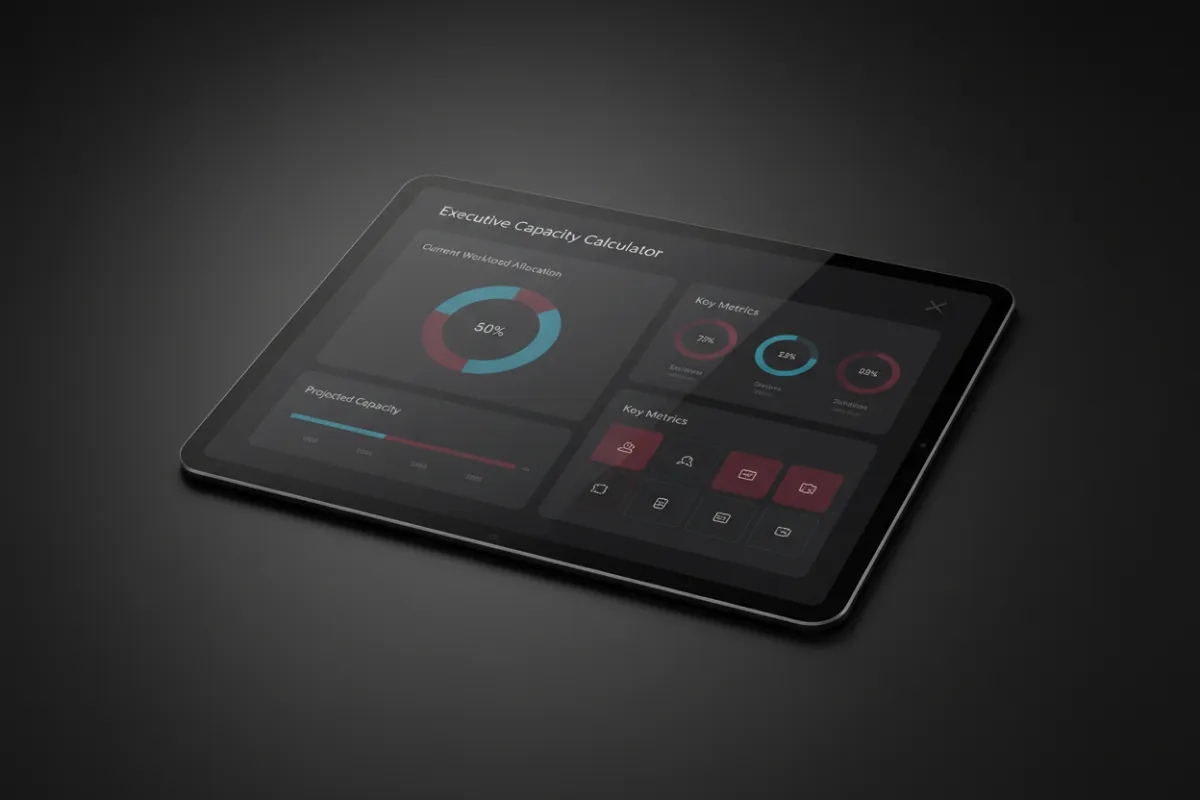
Executive Capacity Optimizer
An interactive sheet to quantify the exact number of hours you reclaim for your executive each week, proving bottom-line ROI.
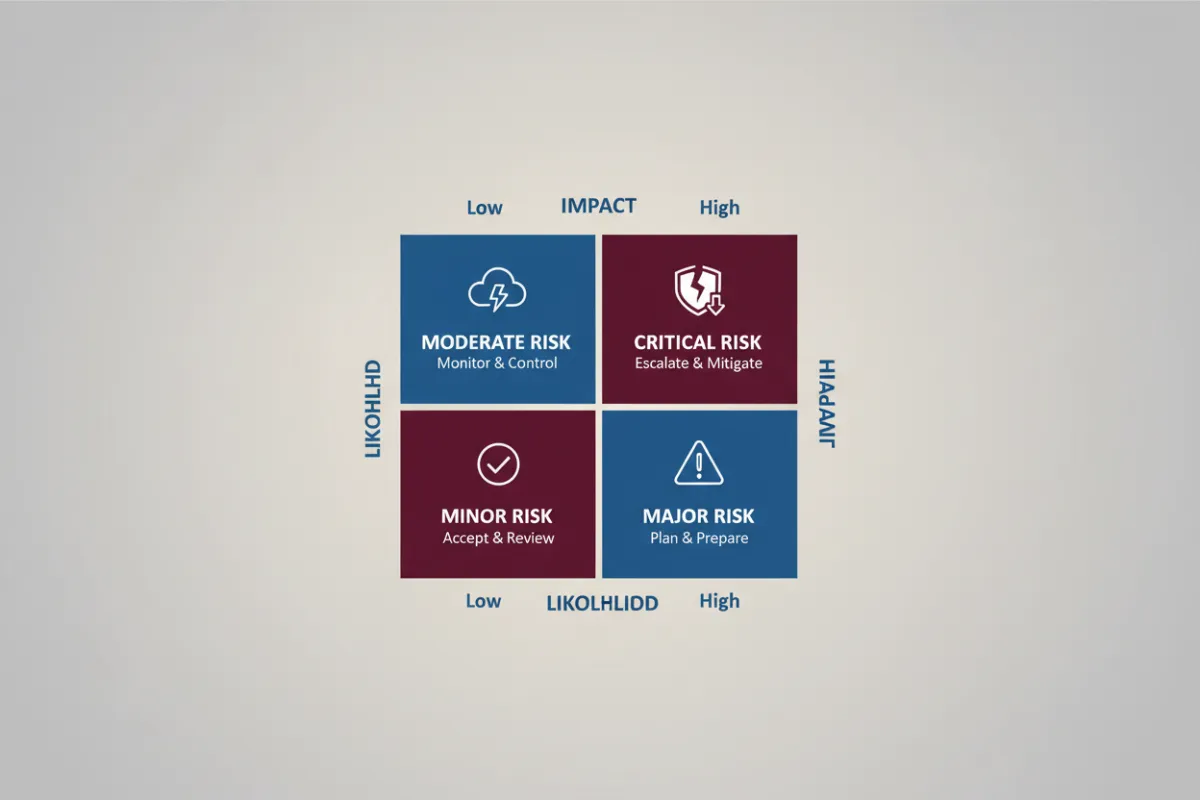
Meeeting Risk Impact Auditor
A visual framework to audit incoming requests, prioritize effectively, and protect the executive's time from non-essential commitments.
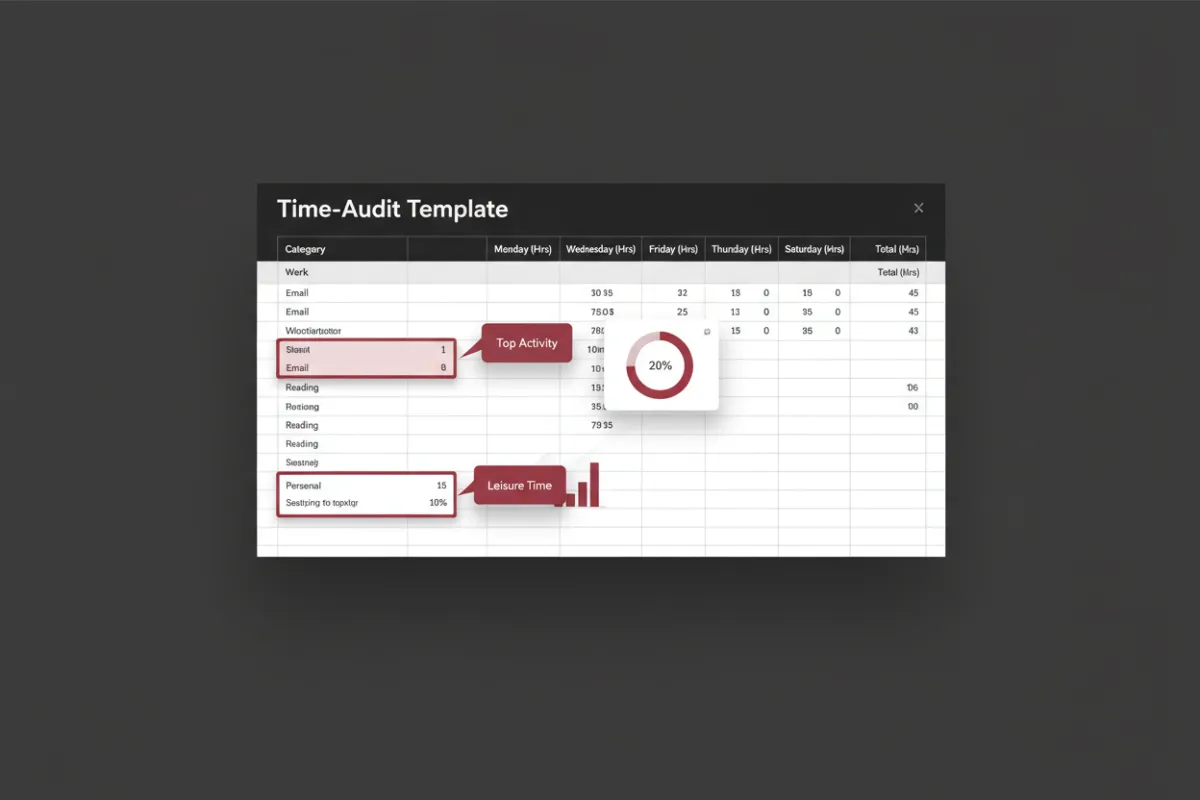
Workload Capacity Index
A structured tool to log activities, identify delegable tasks, and present compelling data for expanding or redesigning your resources or role.
Get Clarity
Frequently Asked Questions
How often should I present ROI data to my executive?
Quarterly is ideal. Monthly is acceptable for high-visibility roles. Annual is too infrequent to shape perception. Present proactively, not in response to review cycles.
What if my executive doesn't care about ROI data?
They care about outcomes — they may just not be accustomed to seeing them from an EA. Start with Time ROI (hours recovered) because it's the most immediately tangible and directly affects their daily experience.
How do I quantify contributions that are hard to measure?
Use the "cost of absence" method: estimate what would happen — or what it would cost to replace your contribution — if you weren't doing it. This works particularly well for risk mitigation and capacity ROI.
What tools can help me build my ROI case?
The Executive Time Optimizer quantifies time recovery. The Workload Capacity Index documents your full scope. The Market Value Calculator anchors your compensation ask to data.
Is proving ROI necessary for a raise?
Not strictly necessary — but EAs who present data-backed cases consistently achieve higher outcomes than those who lead with tenure or effort. Data changes the conversation from 'she\'s asking for more' to 'she\'s showing us what she\'s worth.'
Take The Next Step
Ready to turn Executive Support into measurable ROI?
Get the exact frameworks and talking points to quantify your impact, negotiate your worth, and elevate your strategic partnership.
Includes: 12-page ROI Briefing PDF and ready-to-use presentation templates.
The EA ROI Framework was developed by Joshua Washington, Organizational Psychologist and founder of EA-Pros.
For a detailed breakdown of how to apply this framework to your specific role, take the Strategic Readiness test or explore the EA-Pros Programs